The Bible · Start to finish

Two books?
One story.

The Hebrew Bible described someone who was coming. Then someone came who fit the description.

  1. 01How it broke
  2. 02The promise
  3. 03The way back
  4. 04The signs
  5. 05The match
Start here

You may have heard this book read.

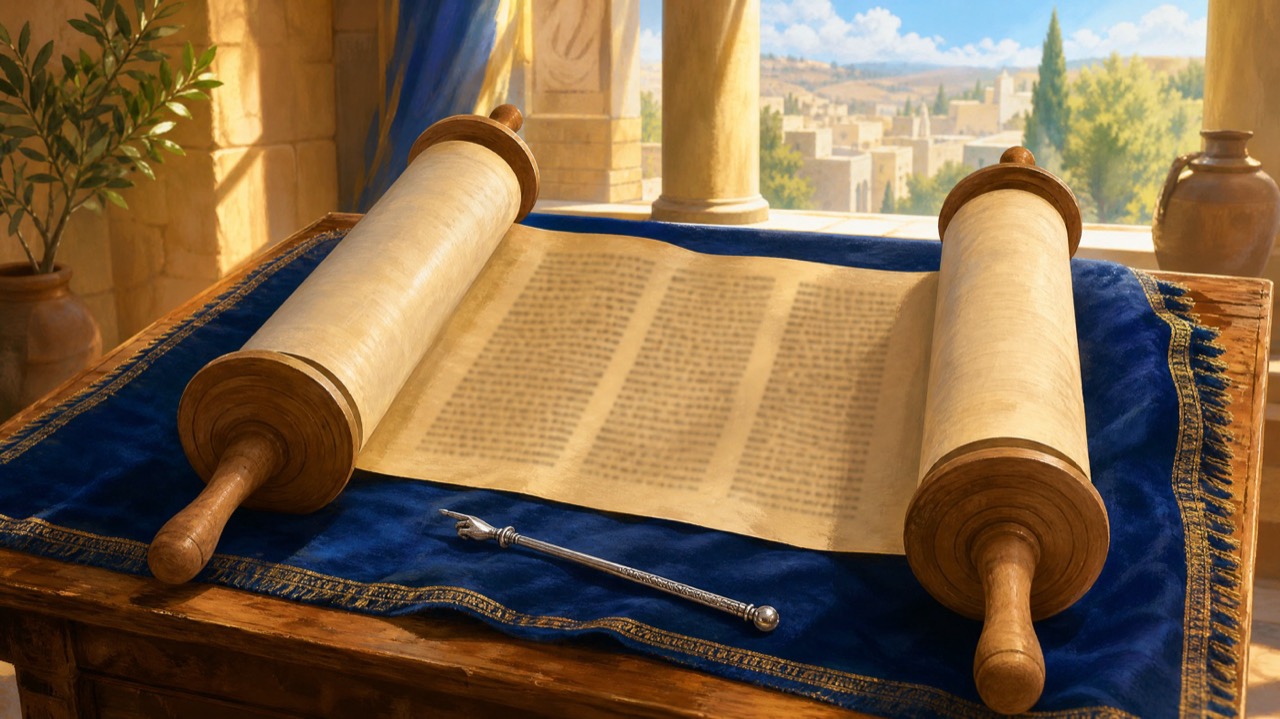
A Torah scroll open on a reading table covered in blue velvet, a silver pointer resting beside it

This is a Torah scroll.

Torah תּוֹרָה is Hebrew for teaching.

It holds the first five books of the Bible: Genesis, Exodus, Leviticus, Numbers and Deuteronomy.

If you've been to a bar or bat mitzvah, you've heard it read.

Now open a Christian Bible to page one.

Same five books. Same words.

Part one: the Hebrew BibleJewish people call it the Tanakh. Christians call it the Old Testament. Same books, in a different order.
Part two: the New TestamentWritten later by Jesus' first followers. Almost all of them were Jewish.

One shelf. Two parts.

The first part makes promises.

The second part says they came true.

Let's start at the beginning.

01 · How it started

In the beginning, it was good.

Adam and Eve, seen small from behind, walking hand in hand toward a great tree in a bright garden

God made the world.

He made the first man and woman: Adam and Eve.

He put them in a garden. Everything they needed was there.

They walked with God. Nothing was broken.

He gave them one rule.

you must not eat from the tree of the knowledge of good and evil
Genesis 2:17
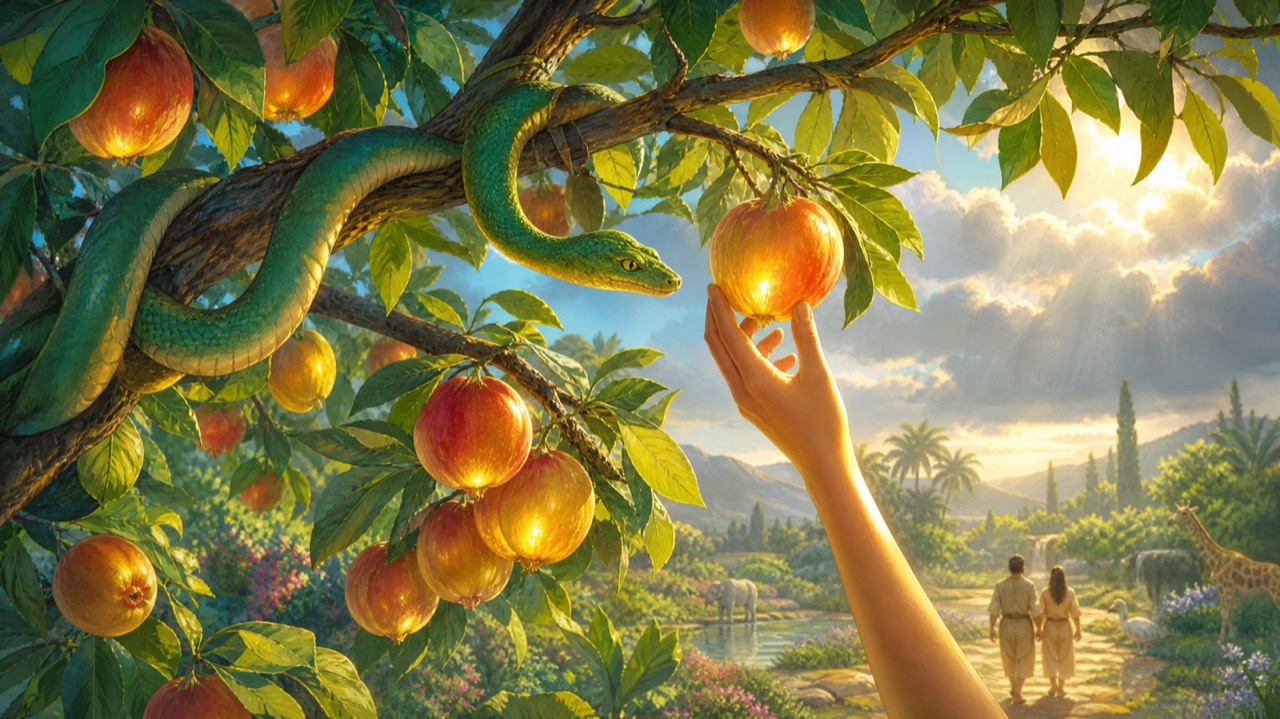
A serpent wound along a branch heavy with fruit as a hand reaches up to pick one

Then a serpent came with a lie.

You will not surely die
Genesis 3:4

It said God was holding something good back from them.

They believed the lie.

They ate.

This is where people rebelled against God.

That rebellion has a name: sin.

Sin means going our own way instead of God's way.

It broke their trust. It broke their home.

It brought death into the world.

And every one of us has done it since.

Surely there is no righteous man on earth who does good and never sins.
Ecclesiastes 7:20

So we need a way back to God.

The first promise

God made a promise that same day.

God spoke to the serpent.

He will crush your head, and you will strike his heel.
Genesis 3:15
  1. Step 1A child is coming

    He will come from the woman. A person, not a plan.

  2. Step 2He gets hurt

    The serpent strikes his heel. It hurts, but it isn't the end.

  3. Step 3He wins

    He crushes the serpent's head. That is the end of the serpent.

  4. Step 4Watch for him

    The rest of the Bible is looking for this child.

Bible teachers Chuck Smith and Gary Hamrick both call this the first promise of a rescuer in the Bible.

One more thing happened that day.

God made clothes for them out of animal skins (Genesis 3:21).

For there to be skins, an animal had to die.

Something died so they could be covered.

Remember that.

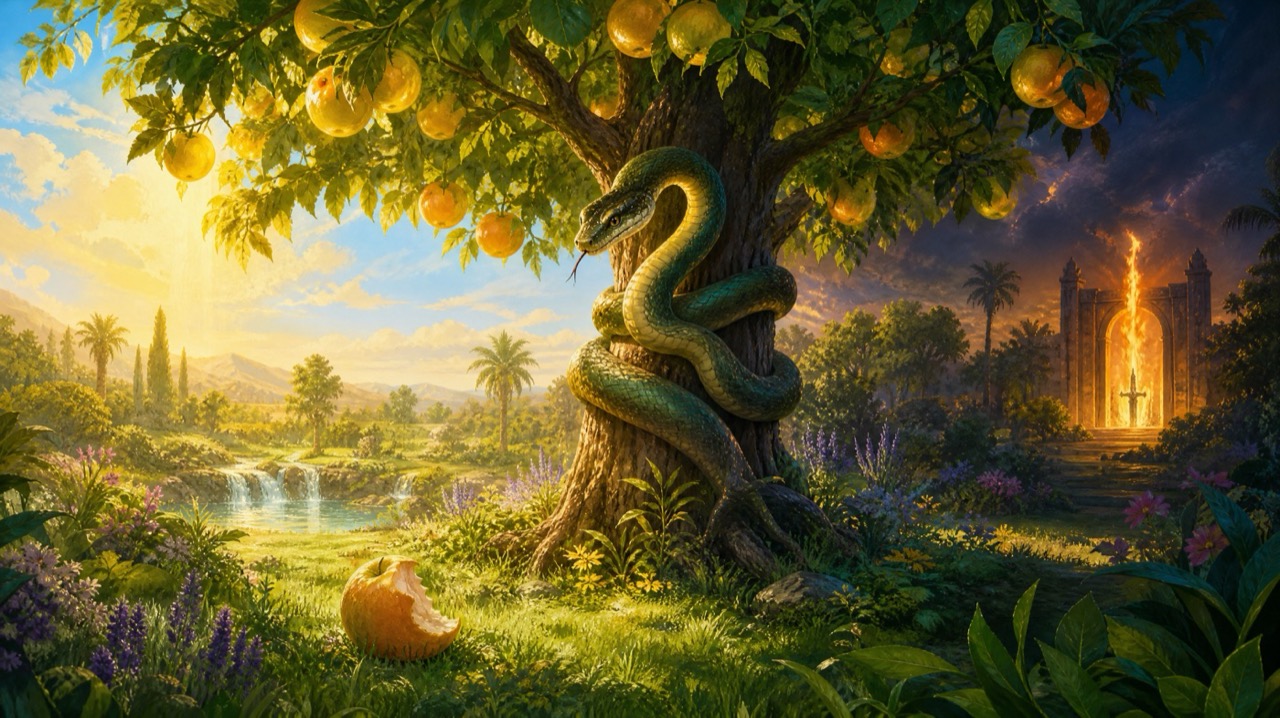
The tree and the serpent in the garden, a bitten fruit on the ground, and a flaming sword guarding the gate

Then they had to leave the garden.

A flaming sword guarded the way back in (Genesis 3:24).

The rest of the Bible is the story of God making a new way back.

02 · The promise

God picked one family.

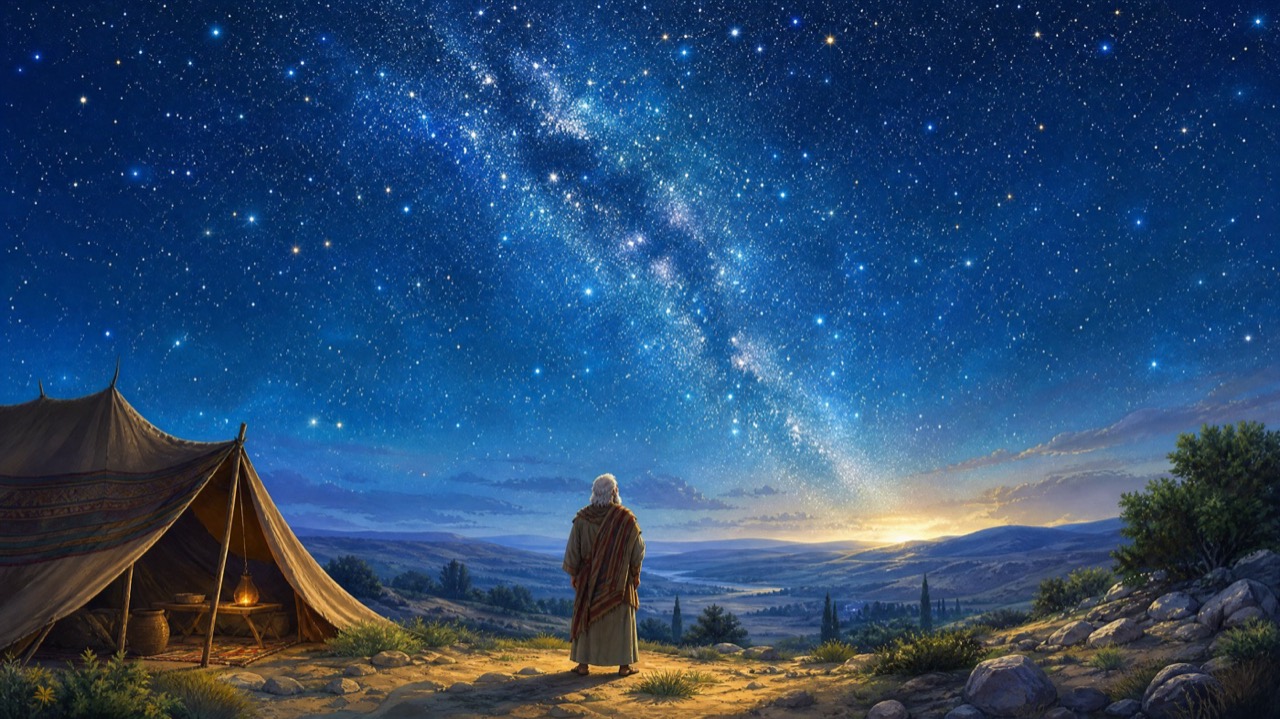
Abraham, seen small from behind, looking up at a sky full of stars beside his tent

Many years later, God spoke to a man named Abraham.

He made Abraham a covenant: a promise God would never break.

all the families of the earth will be blessed through you.
Genesis 12:3

Not just one family. Every family on earth.

God said it would come through Abraham's "offspring" (Genesis 22:18).

In Hebrew it's the same word as the "seed" in the garden promise.

The promised child would come from this family.

  1. Abrahamgets the promise
  2. Isaachis son
  3. JacobGod renames him Israel
  4. 12 sonsthe 12 tribes of Israel
ReubenSimeonLeviJudahDanNaphtaliGadAsherIssacharZebulunJosephBenjamin
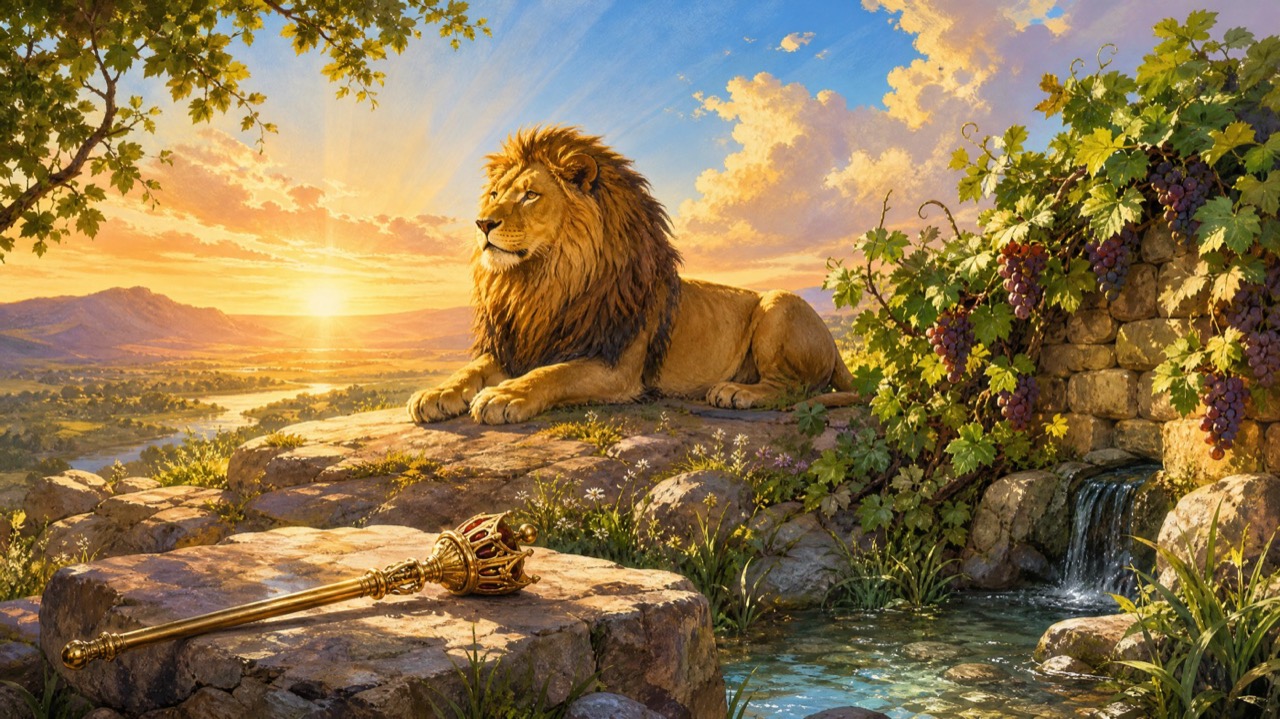
A lion resting on a rocky hill at sunset beside a royal scepter and a fruitful vine

One of the twelve sons was Judah.

Before he died, Jacob blessed his sons. To Judah he gave a promise about kings.

The scepter will not depart from Judah
Genesis 49:10

A scepter is a king's rod.

Judah would be the tribe of kings.

The wordיְהוּדִי

Jewish

Yehudi · "from Judah"

Judah → Judean → Jew. The word comes straight from Judah's name.

Later, Israel's kingdom split in two. The southern kingdom was called Judah, and its people were called Judeans: Jews. Over time the name came to mean all of Israel's people.

More on this belowWhat "Jewish" meant then, and what it means today, is in The words.

Who will the child come from?Every family on earth
Abraham's family
Judah's tribe
keep scrolling…

The search is getting narrower.

03 · The way back, for now

Sin costs a life.

God is holy. Sin can't just be ignored.

So God gave Israel a way to come back to Him: a sacrifice.

An animal died in the person's place.

it is the blood that makes atonement for the soul.
Leviticus 17:11
The wordכִּפֻּרִים

Atonement

kippurim · as in Yom Kippur

Being made right with God again. Say it slowly: at-one-ment.

The Hebrew word is often explained as "covering." Like the skins God used to cover Adam and Eve.

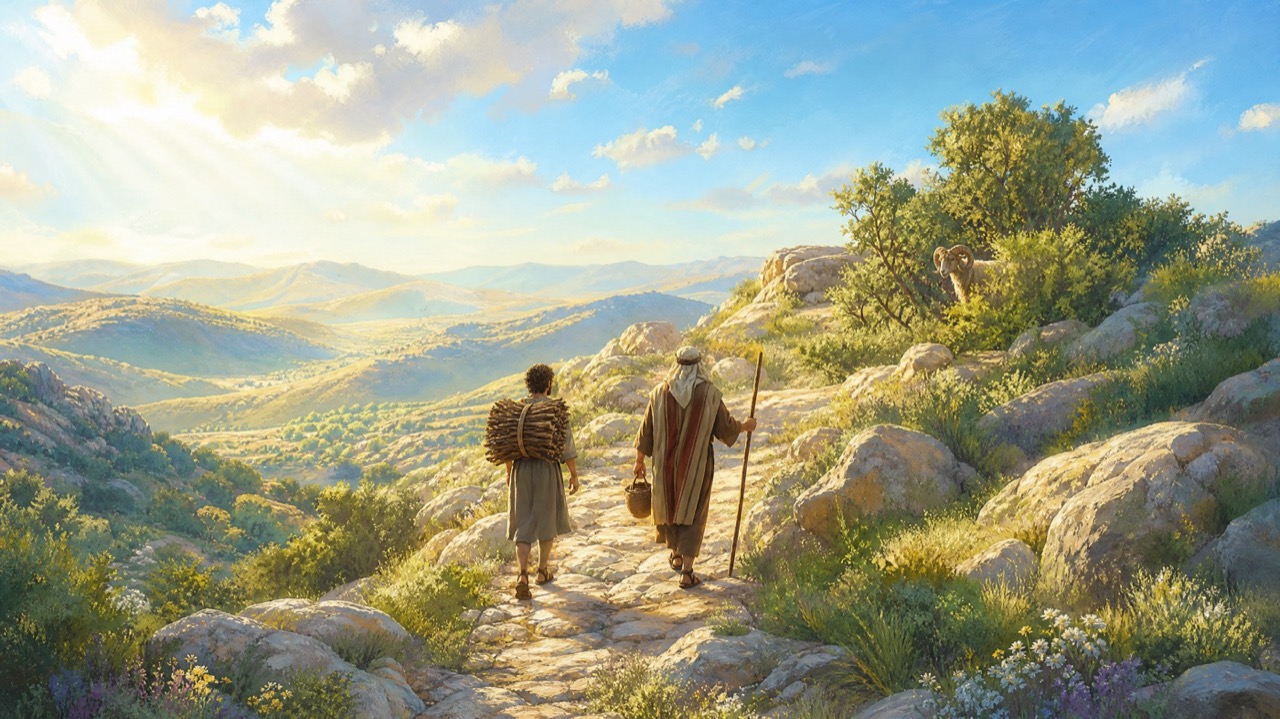
Abraham and his grown son Isaac, seen small from behind, climbing a mountain path with firewood
Story 1 · Abraham and Isaac

"Where is the lamb?"

God tested Abraham. He told him to offer his son Isaac. On the way up the mountain, Isaac asked where the lamb was.

God Himself will provide the lamb for the burnt offering, my son.Genesis 22:8

God stopped Abraham. A ram took Isaac's place. But Abraham's words stayed in the air: God will provide the lamb.

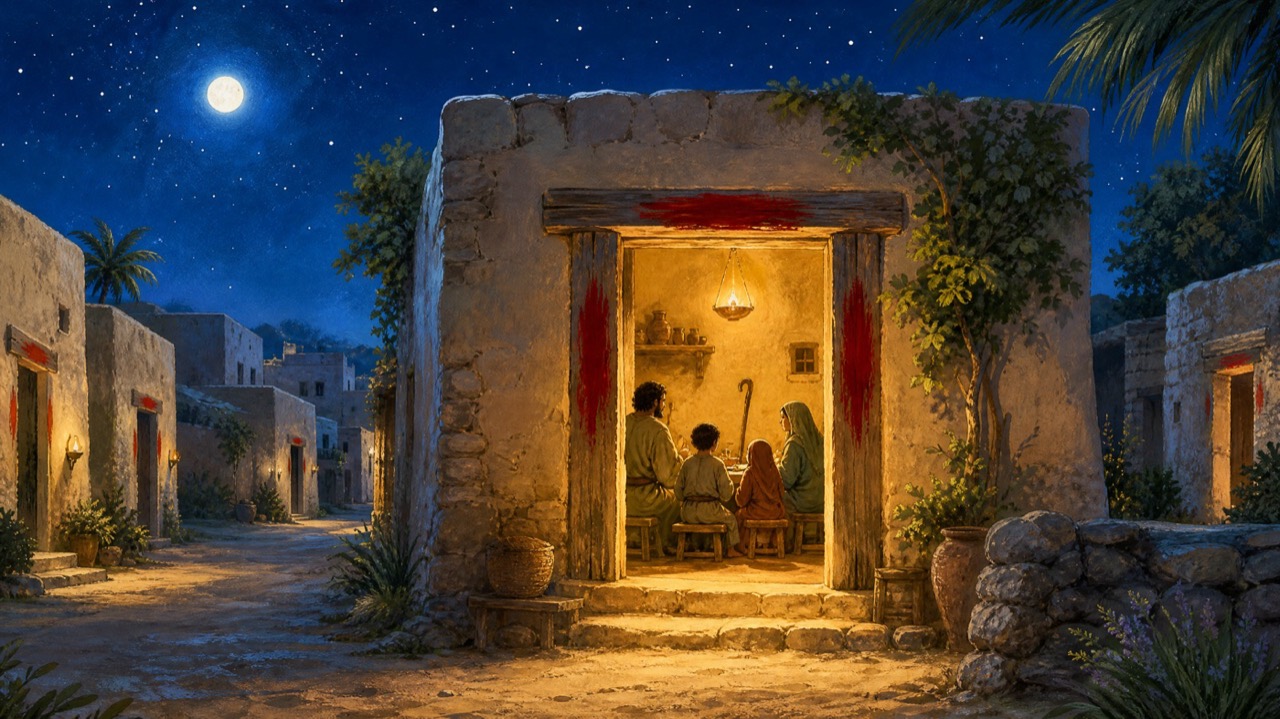
A mud-brick house at night with lamb's blood on its doorposts, a family eating inside by lamplight
Story 2 · Passover פֶּסַח

The blood on the door.

The Israelites were slaves in Egypt. On the last night, each family killed a lamb and painted its blood on the doorframe.

when I see the blood, I will pass over you.Exodus 12:13

Death passed over every house with the blood. Every Passover Seder still tells this story.

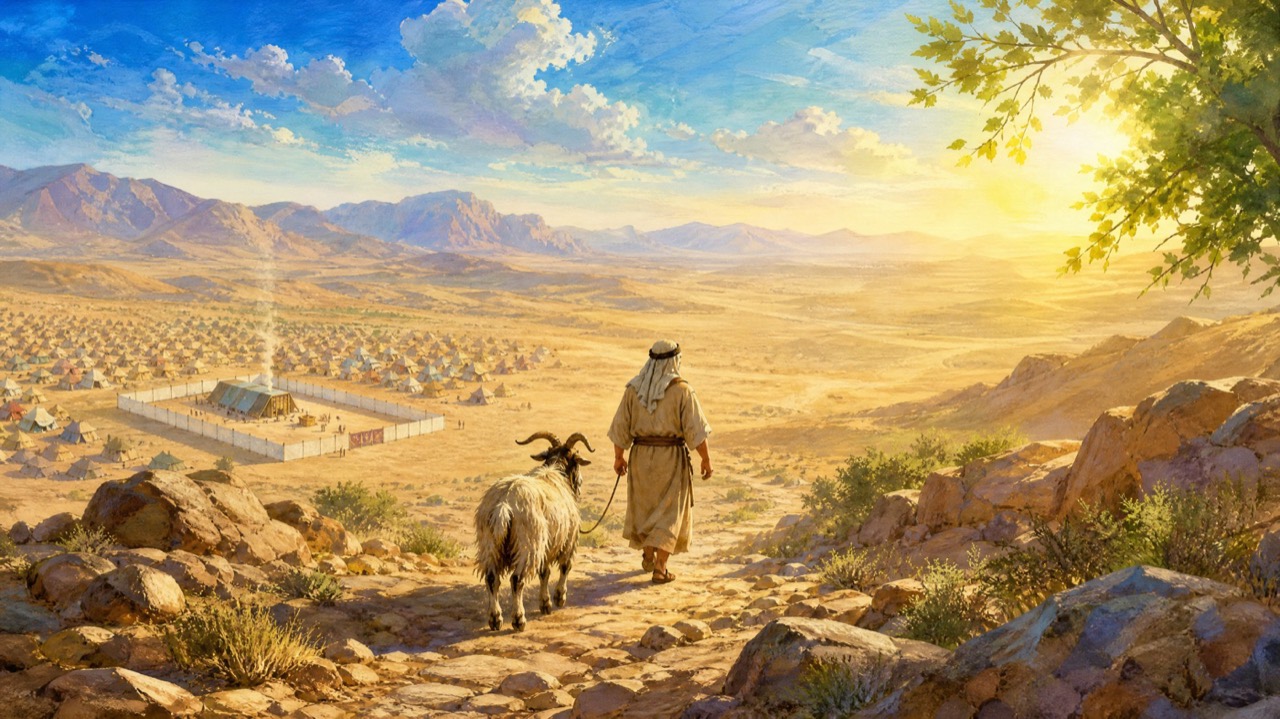
A man leading a goat away into the desert, the camp of Israel small in the distance
Story 3 · Yom Kippur יוֹם כִּפּוּר

The goat that carried sin away.

Once a year, on the Day of Atonement, the high priest laid his hands on a goat's head and confessed the people's sins over it. Then the goat was led away into the wilderness.

The goat will carry on itself all their iniquitiesLeviticus 16:22

Yom Kippur is still the holiest day of the Jewish year.

But it was never finished.

The sacrifices had to happen again and again.

Every morning. Every evening. Every year.

They were pictures. They pointed to something bigger.

Then, in AD 70, the Romans destroyed the Temple in Jerusalem.

The sacrifices stopped. They have not started again.

04 · The signs

Watch for him.

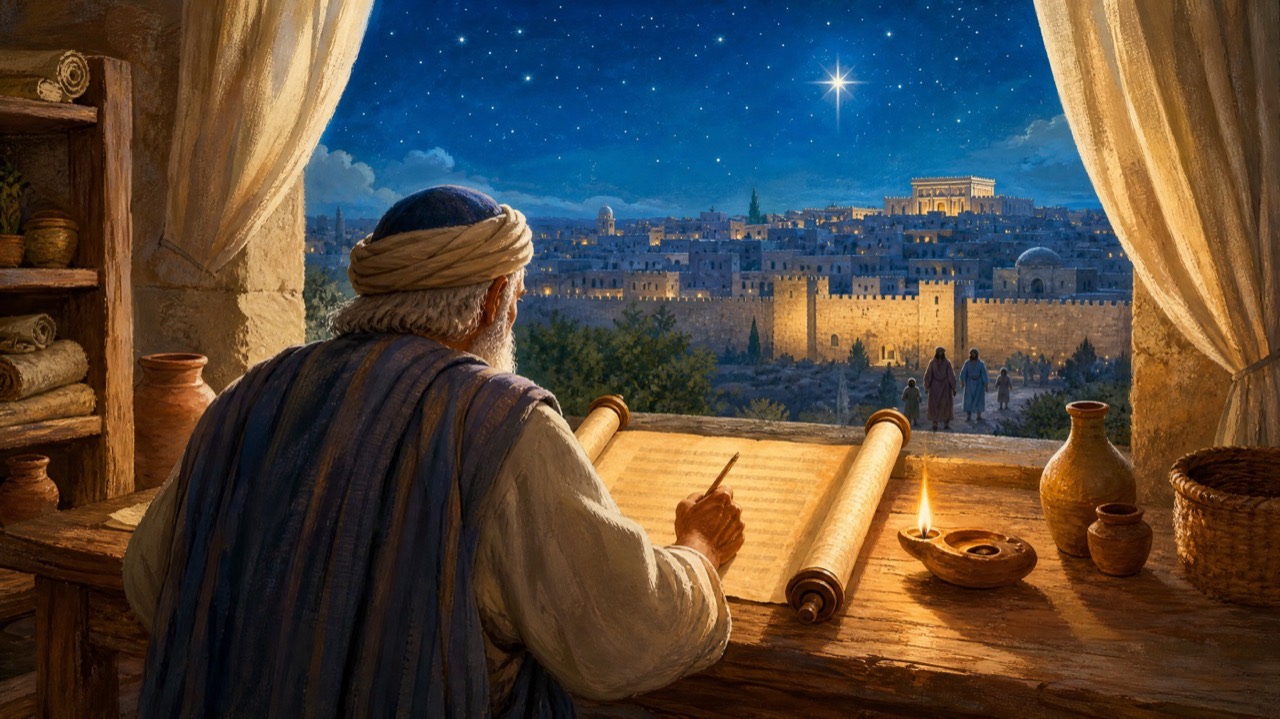
An old prophet, seen from behind, writing on a scroll by lamplight at a window over Jerusalem at night

God also sent prophets.

A prophet is someone God speaks through.

Over about 1,000 years, they wrote down clues about the one who was coming.

The wordמָשִׁיחַ

Messiah

Mashiach · "anointed one"

Anointed means oil was poured on your head. That's how Israel's kings were chosen.

In Greek, the same word is Christos. In English: Christ.

Where it got blurry"Christ" is not Jesus' last name. It's a title. "Jesus Christ" means "Jesus the Messiah."

12 signs. Here's who to look for.

  1. SIGN 01

    From Abraham's family

    "through your offspring all nations of the earth will be blessed"

    Genesis 22:18about 1400 BC
  2. SIGN 02

    From the tribe of Judah

    "The scepter will not depart from Judah"

    Genesis 49:10about 1400 BC
  3. SIGN 03

    From King David's family

    "I will establish the throne of his kingdom forever."

    2 Samuel 7:13about 1000 BC
  4. SIGN 04

    Born to a virgin

    "the virgin will be with child and give birth to a son"

    Isaiah 7:14about 700 BC
  5. SIGN 05

    Born in Bethlehem

    "Bethlehem … out of you will come forth for Me One to be ruler over Israel"

    Micah 5:2about 700 BC
  6. SIGN 06

    A messenger gets people ready first

    "Prepare the way for the LORD"

    Isaiah 40:3about 700 BC
  7. SIGN 07

    A king who rides in on a donkey

    "your King comes to you … humble and riding on a donkey"

    Zechariah 9:9about 520 BC
  8. SIGN 08

    Sold for thirty pieces of silver

    "they weighed out my wages, thirty pieces of silver."

    Zechariah 11:12about 520 BC
  9. SIGN 09

    Rejected, and silent before his accusers

    "He was despised and rejected by men … He did not open His mouth."

    Isaiah 53:3, 7about 700 BC
  10. SIGN 10

    Hands and feet pierced, clothes gambled for

    "they have pierced my hands and feet … and cast lots for my clothing."

    Psalm 22:16, 18about 1000 BC
  11. SIGN 11

    Dies for our sins, with criminals, buried with the rich

    "the LORD has laid upon Him the iniquity of us all."

    Isaiah 53:6, 9, 12about 700 BC
  12. SIGN 12

    Not left in the grave

    "nor will You let Your Holy One see decay."

    Psalm 16:10 · Isaiah 53:11about 1000 BC

Written long before.

about 1400 BCMosesthe Torah
about 1000 BCKing DavidPsalms 16 and 22
about 700 BCIsaiah and Micahvirgin, Bethlehem, Isaiah 53
about 520 BCZechariahdonkey, silver
about 430 BCMalachithe last prophet
about 125 BCDead Sea Scrollsa full Isaiah scroll is copied
about AD 30Jesus

Dates are approximate. Scholars differ on some of them.

Isaiah 53 · written about 700 years before Jesus

He was despised and rejected by men, a man of sorrows, acquainted with grief.53:3

But He was pierced for our transgressions, He was crushed for our iniquities53:5

We all like sheep have gone astray, each one has turned to his own way; and the LORD has laid upon Him the iniquity of us all.53:6

He was led like a lamb to the slaughter53:7

He was assigned a grave with the wicked, and with a rich man in His death53:9

Transgressions and iniquities are the wrong things we do.

Who does that sound like?

05 · The match

Then he came.

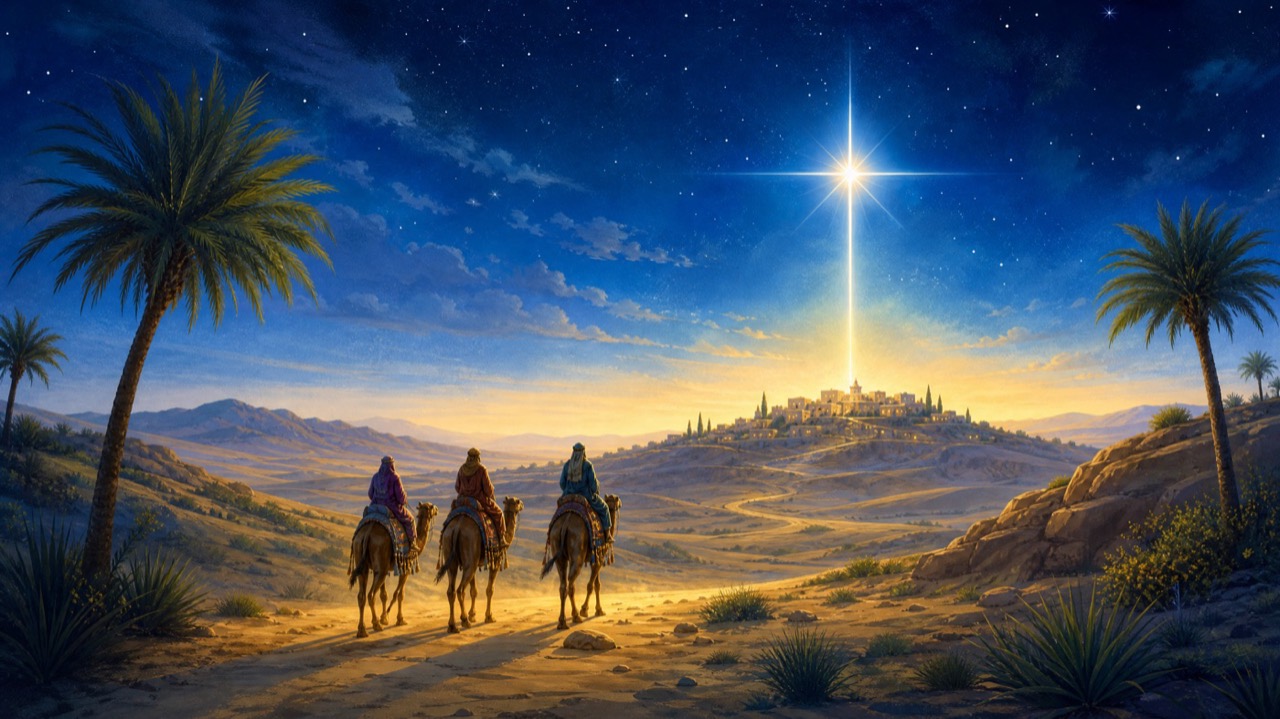
A bright star over the little town of Bethlehem at night, travelers on the road

About 2,000 years ago, a baby was born in Bethlehem.

His mother, Mary, was a virgin.

His name was Yeshua.

The wordיֵשׁוּעַ

Jesus

Yeshua · "the LORD saves"

Jesus is how his Hebrew name came into English, by way of Greek. It's the same name as Joshua.

An angel told Joseph why: "you are to give Him the name Jesus, because He will save His people from their sins" (Matthew 1:21).

He was Jewish. He grew up keeping the Torah.

His first followers were all Jewish too.

Now, the same 12 signs. Same order.

  1. 01
    The signFrom Abraham's familyGenesis 22:18
    What happened

    Matthew's very first line calls Jesus the son of David, the son of Abraham.

    Matthew 1:1
    ✓
  2. 02
    The signFrom the tribe of JudahGenesis 49:10
    What happened

    His family line runs through Judah: our Lord descended from Judah.

    Matthew 1:2–3 · Hebrews 7:14
    ✓
  3. 03
    The signFrom King David's family2 Samuel 7:13
    What happened

    Joseph was from the house and line of David, and the angel told Mary that God would give her son the throne of His father David.

    Luke 2:4 · Luke 1:32
    ✓
  4. 04
    The signBorn to a virginIsaiah 7:14
    What happened

    Before Mary and Joseph came together, she was found to be with child through the Holy Spirit. Mary asked the angel, How can this be … since I am a virgin?

    Matthew 1:18 · Luke 1:34
    ✓
  5. 05
    The signBorn in BethlehemMicah 5:2
    What happened

    His parents lived in Nazareth, but a Roman census sent them to Bethlehem, where Jesus was born.

    Luke 2:1–7 · Matthew 2:1
    ✓
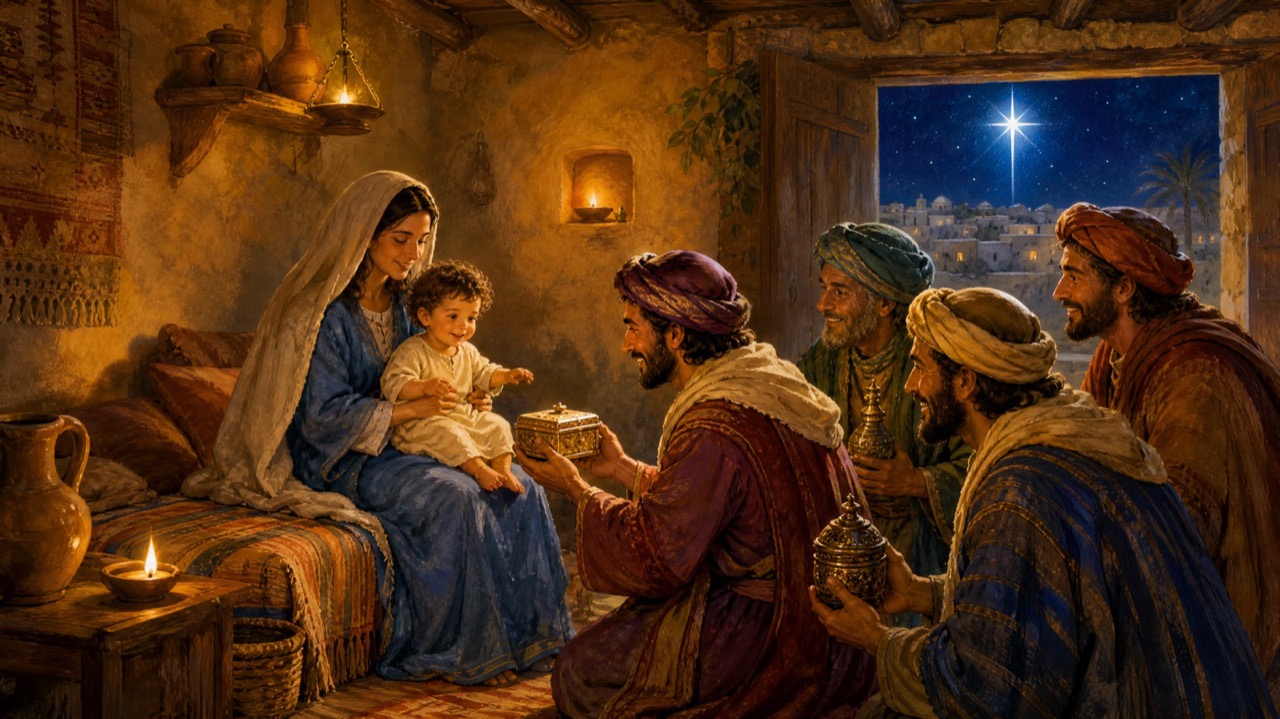
Inside a lamplit house in Bethlehem, Mary holds the young child Jesus as travelers from the east kneel with gifts

When wise men came asking where the King was born, the scholars in Jerusalem already knew the answer from Micah: Bethlehem (Matthew 2:4–6).

  1. 06
    The signA messenger gets people ready firstIsaiah 40:3
    What happened

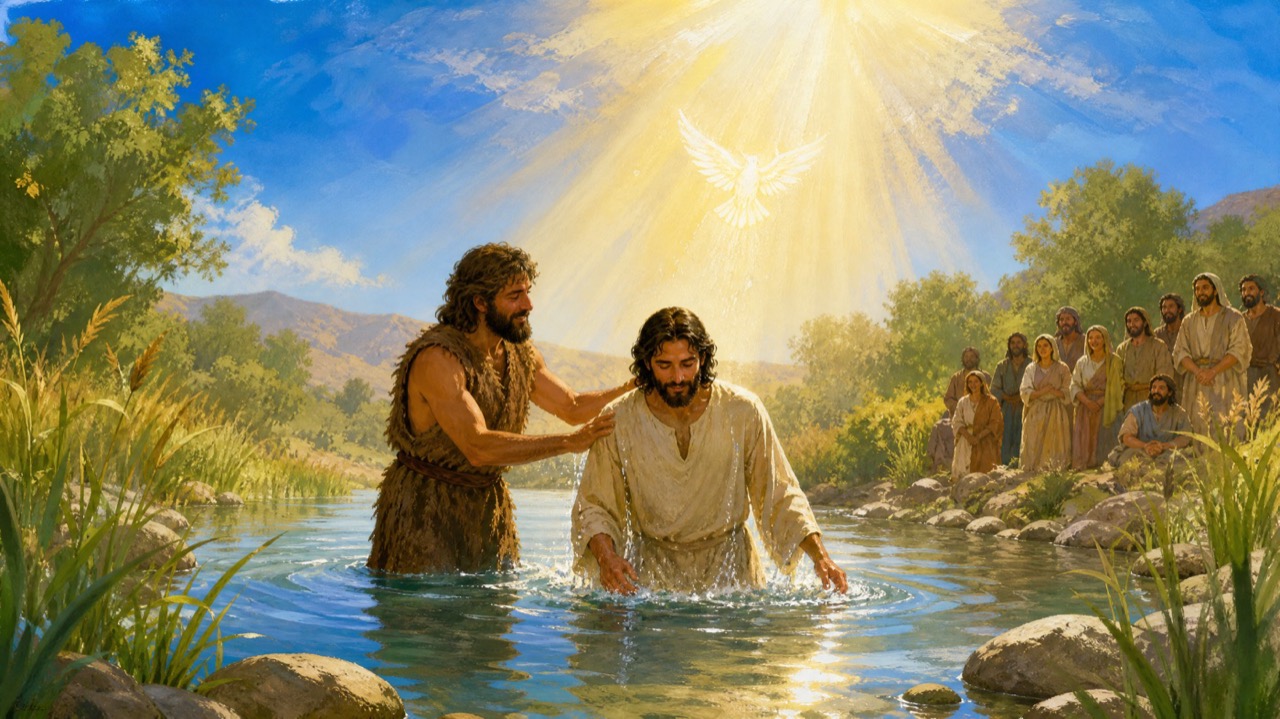
    John the Baptist called people to turn back to God, right before Jesus began. Matthew says John is the one Isaiah wrote about.

    Matthew 3:1–3
    ✓
John the Baptist in the Jordan River as Jesus comes up out of the water under a beam of light
  1. 07
    The signA king who rides in on a donkeyZechariah 9:9
    What happened

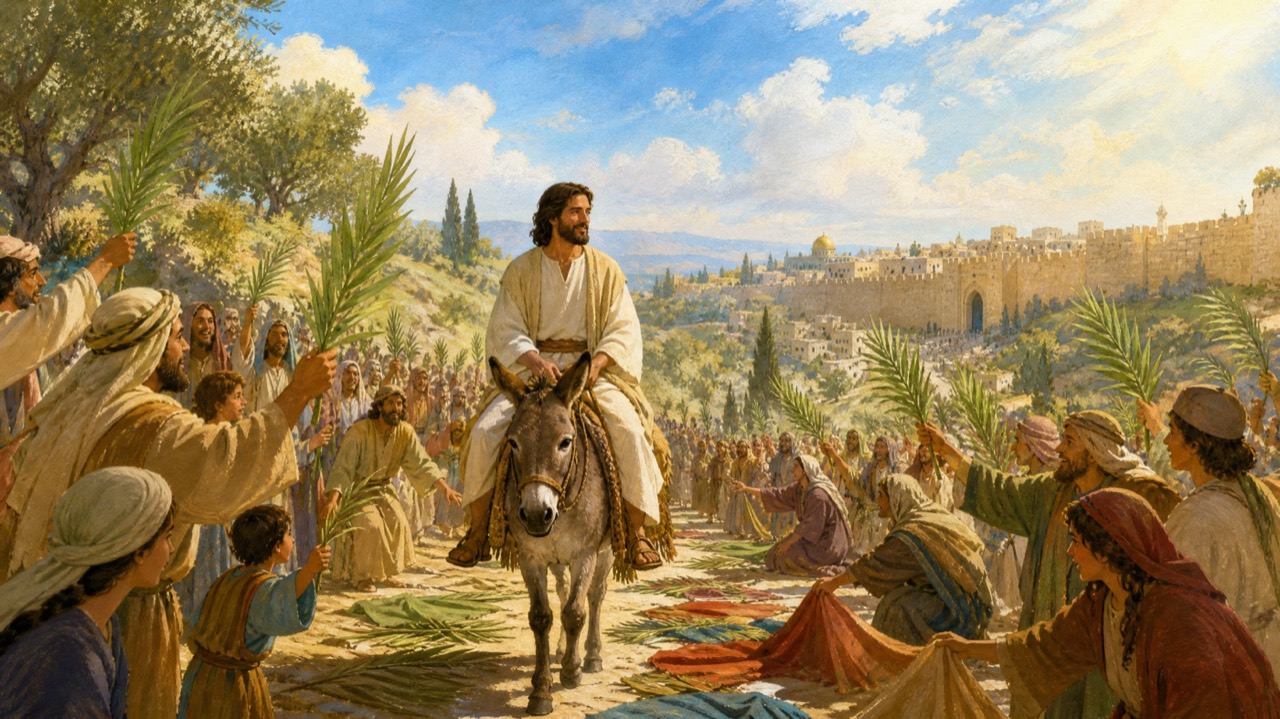
    Jesus rode into Jerusalem on a young donkey while the crowds shouted, Hosanna to the Son of David!

    Matthew 21:1–9
    ✓
Jesus riding a young donkey toward Jerusalem as crowds wave palm branches
  1. 08
    The signSold for thirty pieces of silverZechariah 11:12
    What happened

    Judas, one of his own followers, handed him over. The price: thirty pieces of silver.

    Matthew 26:15
    ✓
  2. 09
    The signRejected, and silent before his accusersIsaiah 53:3, 7
    What happened

    He came to His own, and His own did not receive Him. At his trial, Jesus gave no answer, not even to a single charge.

    John 1:11 · Matthew 27:14
    ✓
  3. 10
    The signHands and feet pierced, clothes gambled forPsalm 22:16, 18
    What happened

    Roman soldiers nailed his hands and feet to a cross. Below him, they cast lots for his clothes. David wrote Psalm 22 about 1,000 years earlier, long before Rome crucified anyone.

    John 19:23–24 · John 20:25
    ✓
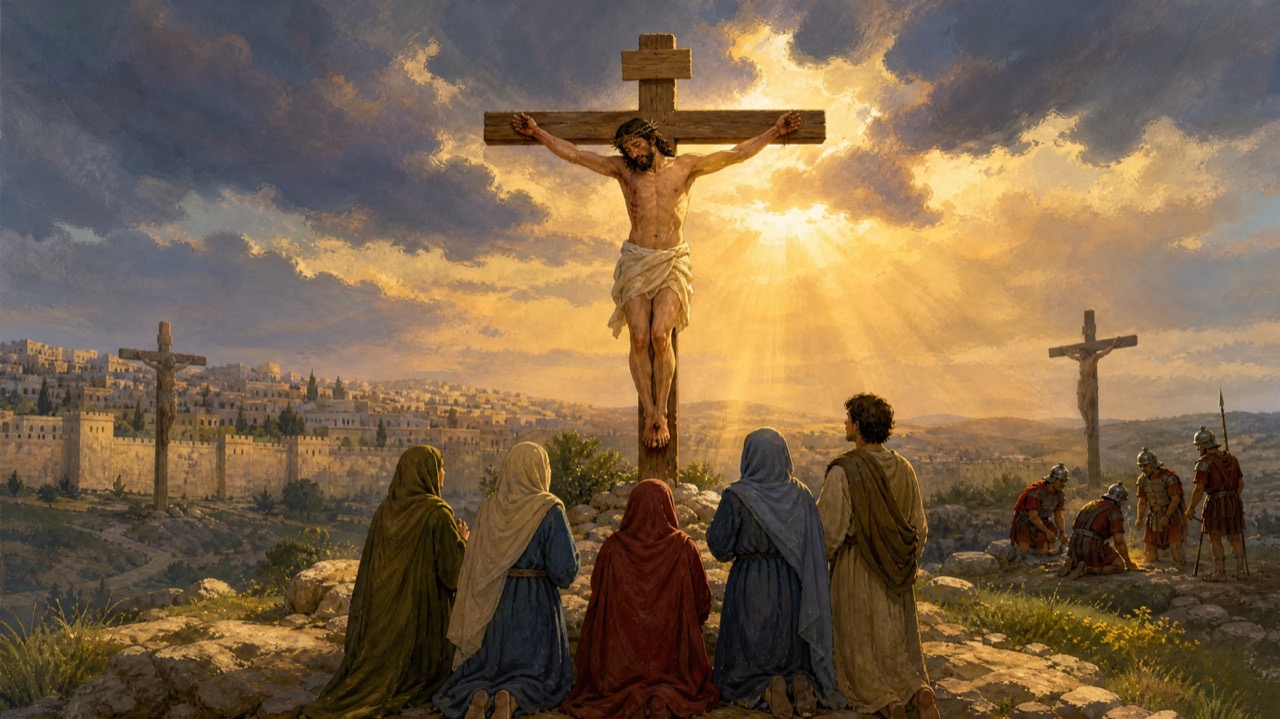
Jesus nailed to the cross on a hill outside Jerusalem, his hands and feet pierced, mourners kneeling below and soldiers casting lots

This is what pierced means.

Nails through his hands. Nails through his feet.

He took it for us.

  1. 11
    The signDies for our sins, with criminals, buried with the richIsaiah 53:6, 9, 12
    What happened

    John the Baptist had pointed to him: Look, the Lamb of God, who takes away the sin of the world! He was crucified between two criminals, then laid in the new tomb of a rich man, Joseph of Arimathea.

    John 1:29 · Luke 23:33 · Matthew 27:57–60
    ✓
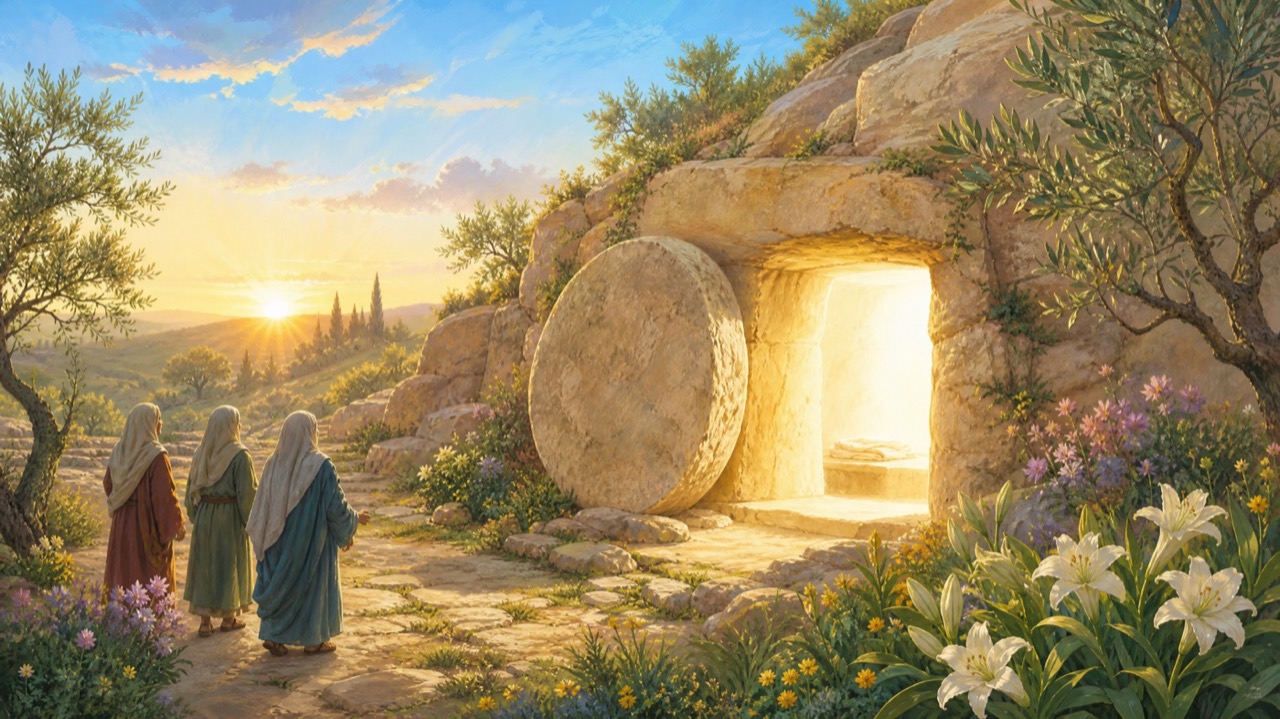
The stone rolled away from an empty tomb in a garden at sunrise
  1. 12
    The signNot left in the gravePsalm 16:10 · Isaiah 53:11
    What happened

    On the third day the tomb was empty: He is not here; He has risen, just as He said! Later he appeared to more than five hundred people at once.

    Matthew 28:6 · 1 Corinthians 15:6
    ✓
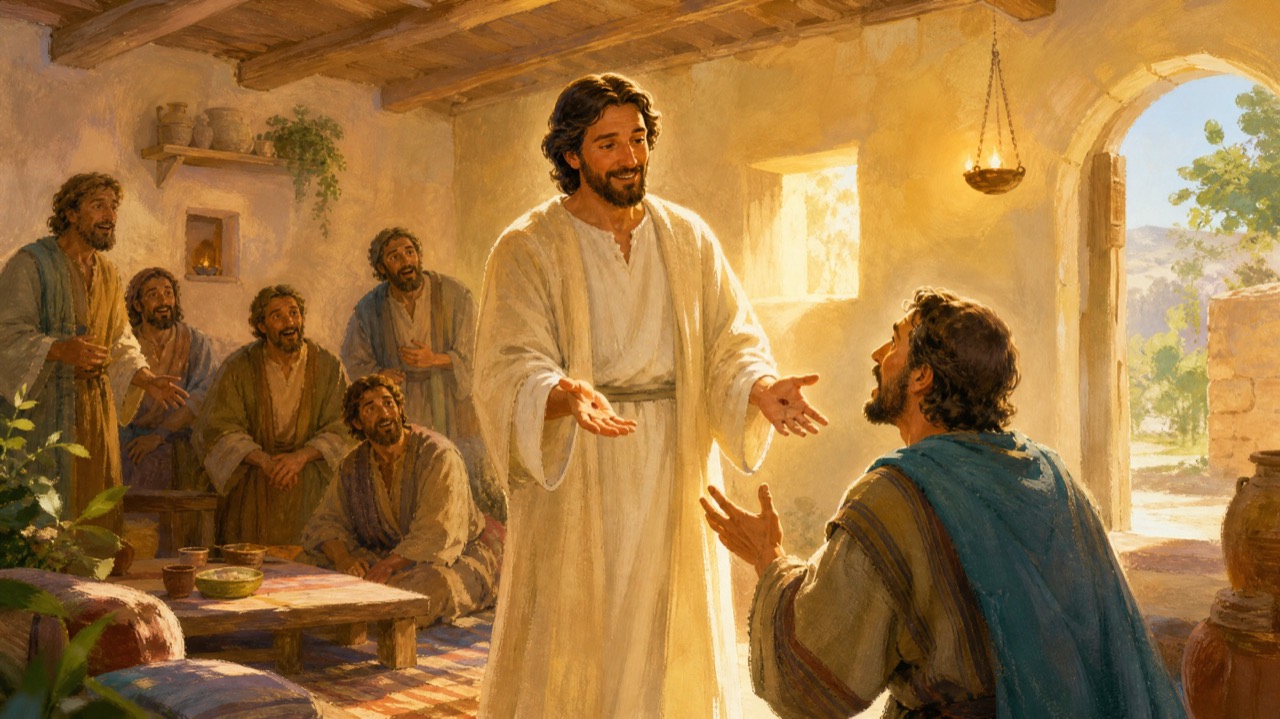
The risen Jesus holding out his hands, the nail scars visible, to a kneeling disciple

"Look at My hands and My feet. It is I Myself." (Luke 24:39)

12 of 12

Signs matched

Remember the pictures?

Every picture from the start of the story points here.

The garden

The serpent would strike his heel. He would crush its head.

Genesis 3:15
The cross

He was struck down. Three days later, death itself was beaten.

Matthew 28:6
The skins

Something died so Adam and Eve could be covered.

Genesis 3:21
The cross

Jesus died so we could be covered, once and for all.

Hebrews 10:10
Abraham

God Himself will provide the lamb

Genesis 22:8 · on Mount Moriah
Jesus

Look, the Lamb of God. Jerusalem's Temple was later built on Mount Moriah. Jesus died just outside that city.

John 1:29 · 2 Chronicles 3:1
Passover

when I see the blood, I will pass over you.

Exodus 12:13
Passover week

Jesus died at Passover. His followers called him our Passover lamb.

1 Corinthians 5:7
Yom Kippur

A goat carried the people's sins away, once a year.

Leviticus 16:22
Jesus

the LORD has laid upon Him the iniquity of us all. Once, for everyone.

Isaiah 53:6

Billy Graham taught that only a Savior with no sin of his own could be the perfect, final sacrifice for our sins. That is why the sacrifices could stop.

06 · Could it be luck?

Could this be a coincidence?

A man could try to act out a few of these signs.

Most of them, no one could.

Could he arrange it?

Maybe

  • Ride into Jerusalem on a donkey
  • Stay silent at his own trial
Out of his hands

No way

  • Which family he is born into
  • Which tribe, and which king's line
  • That his mother is a virgin
  • Which town he is born in
  • A messenger who comes before him
  • The price someone else takes to betray him
  • How he is put to death
  • What soldiers do with his clothes
  • Dying between two criminals
  • A rich man giving him a tomb
  • Coming back to life
Everyone who ever livedEvery family on earth
Abraham's family
Judah's tribe
David's family
Born in Bethlehem
Born to a virgin
Pierced, buried with the rich, alive again
All 12 signsOne man

One sign could be luck. Two could be chance.

Twelve, in one man, written down hundreds of years ahead?

That's not luck. That's a plan.

And these 12 are only a start. The Billy Graham Evangelistic Association counts more than 300 prophecies about the Messiah in the Hebrew Bible.

Then after the sixty-two weeks the Messiah will be cut off and will have nothing. Then the people of the prince who is to come will destroy the city and the sanctuary.
Daniel 9:26

Daniel even gave a deadline.

The Messiah would be "cut off" before the city and the Temple were destroyed.

The Temple fell in AD 70. Jesus died about 40 years before.

07 · The words

Same story. Different labels.

Over time, the words got blurry. Here is what they actually mean.

The wordיְהוּדִי

Jewish, then and now

Hebrew Abraham's people→Israelite Jacob's family→Jew from Judah
Then

In the Bible, being Jewish meant belonging to Israel's people, the family of Abraham, Isaac and Jacob, and worshiping the God of Israel. Life was built around the Torah, the Temple, the Sabbath, and waiting for the Messiah.

Today

Being Jewish can mean faith, family, culture, or all three. Some Jewish people keep the faith closely. Many don't practice it, but still belong to the people. Traditional Jewish law passes it down through the mother, or through converting. Some Jewish movements count the father too.

Where it got blurryMany people grow up Jewish by family, even have a bar or bat mitzvah, and never get to read what the Prophets said about the Messiah. This page is a place to start.

The wordתּוֹרָה

Torah

"teaching"

The first five books of the Bible, written by Moses.

Where it got blurryIt sounds like a Jewish-only book. It is also the first five books of every Christian Bible.

The wordתַּנַ״ךְ

Tanakh

the Hebrew Bible

Three parts: Torah (teaching), Nevi'im (prophets), Ketuvim (writings). T-N-K.

Where it got blurryChristians call these same books the Old Testament.

The wordבְּרִית

Old Testament

"old covenant" · berit is Hebrew for covenant

The first part of the Christian Bible: the Hebrew Bible.

Where it got blurry"Old" can sound like "out of date." Jesus said, "I have not come to abolish them, but to fulfill them" (Matthew 5:17).

The wordבְּרִית חֲדָשָׁה

New Testament

"new covenant" · berit chadashah

The 27 books about Jesus and his first followers.

Where it got blurryIt sounds like another religion's book. Its very name comes from a Hebrew prophet: "a new covenant with the house of Israel and with the house of Judah" (Jeremiah 31:31).

The wordβιβλία

Bible

biblia · "the books"

A library on one shelf: 66 books in most Protestant Bibles.

Where it got blurryPeople think of two books. It's one library telling one story.

The wordמָשִׁיחַ

Messiah

Mashiach · "anointed one"

The King God promised, from David's family.

Where it got blurryIt's the same word as Christ, in another language.

The wordΧριστός

Christ

Christos · "anointed one"

The Greek word for Messiah.

Where it got blurryIt's a title, not a last name. "Jesus Christ" means "Jesus the Messiah."

The wordיֵשׁוּעַ

Jesus

Yeshua · "the LORD saves"

His Hebrew name. The same name as Joshua.

Where it got blurry"Jesus" sounds foreign to Jewish ears. His own family called him Yeshua.

The wordΧριστιανός

Christian

"a Messiah follower"

A follower of Jesus the Messiah. The name was first used in Antioch (Acts 11:26).

Where it got blurryIt sounds like the opposite of Jewish. The first followers were Jewish, and they believed Israel's Messiah had come.

The labels don't split the story.

One God. One promise. One person it all pointed to.

08 · Fair questions

Fair questions.

Good people have read these verses differently. Here are the big questions, answered honestly.

Isn't Isaiah 53 about Israel?

Many Jewish readers today say yes: the servant is the people of Israel, who have suffered so much. Isaiah does call Israel God's servant in other places (Isaiah 41:8).

Christians notice what makes chapter 53 different. This servant suffers for the sins of others: "He was pierced for our transgressions." And he is innocent: "He had done no violence."

Some ancient Jewish teachers also read it about the Messiah. An old Aramaic version of Isaiah, the Targum, names the servant in 52:13 "the Messiah," though it reads the suffering lines another way.

Doesn't "almah" just mean "young woman"?

Yes, almah means a young woman who isn't married yet. Many Jewish readers see Isaiah 7:14 as a sign for King Ahaz's own day.

But before Jesus was born, Jewish scholars who translated Isaiah into Greek chose parthenos, the word for a virgin. Matthew read it the same way.

Many Christians see two layers: a sign for Ahaz's day, and a bigger sign still to come.

Did the writers just make Jesus fit?

Look back at the list. A man can't choose his family line, his birthplace, or what soldiers do with his clothes. He can't arrange a rich man's tomb.

The prophecies themselves were copied by Jewish scribes long before Jesus. The Isaiah scroll found with the Dead Sea Scrolls was copied over 100 years before he was born, and Isaiah 53 is in it.

The first followers told this story to people who had been there. Some were killed for saying it (Acts 12:2).

Then why don't more Jewish people believe it?

There are real reasons. Many in Jesus' day expected a Messiah who would rule as king right away. A Messiah who suffers was hard to accept. Even his own followers said, after the cross, "we were hoping He was the One who would redeem Israel" (Luke 24:21).

Over the centuries, terrible things were done to Jewish people in Jesus' name. That made his name hard to hear. And many were simply taught to read these verses another way.

Still, the first people to believe in Jesus were all Jewish. Many Jewish people follow him today.

The road home

He explained it himself.

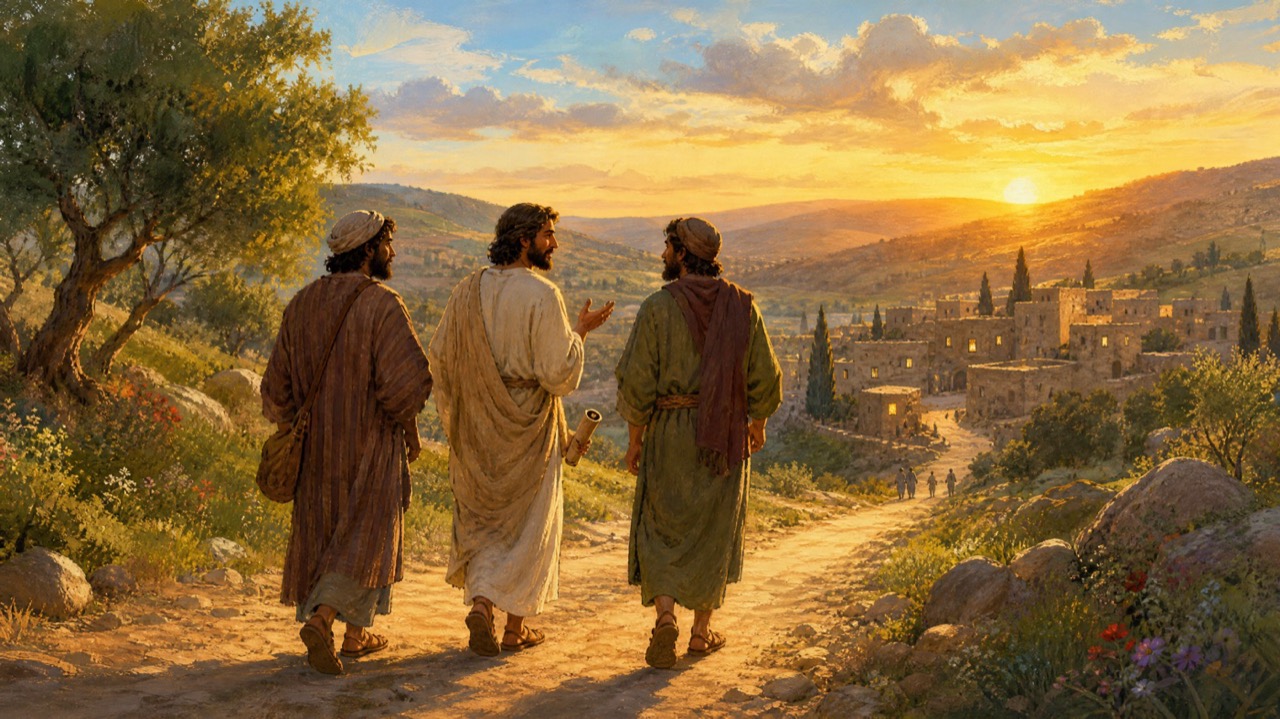
Jesus walking with two followers on a road through green hills at sunset, explaining as they listen

After he rose, Jesus walked with two of his followers on a road.

They didn't understand what had happened yet.

So he started at the very beginning.

And beginning with Moses and all the Prophets, He explained to them what was written in all the Scriptures about Himself.
Luke 24:27

Later, he named all three parts of the Hebrew Bible.

Everything must be fulfilled that is written about Me in the Law of Moses, the Prophets, and the Psalms.
Luke 24:44
תּוֹרָהTorahthe teaching"the Law of Moses"
נְבִיאִיםNevi'imthe prophets"the Prophets"
כְּתוּבִיםKetuvimthe writings"the Psalms"
  1. 01How it broke

    People rebelled against God.

  2. 02The promise

    A child would come, through Abraham and Judah.

  3. 03The way back

    Sacrifices, again and again, pointing ahead.

  4. 04The signs

    Prophets described him in advance.

  5. 05The match

    Jesus fit every sign.

Not two books.
One story.

And it's about him.

Don't take this page's word for it. Read it yourself.

Sources. All Scripture is from the Berean Standard Bible, which is in the public domain. The teaching here follows Chuck Smith (The Word for Today, verse-by-verse studies), Gary Hamrick (Cornerstone Chapel) and the Billy Graham Evangelistic Association (billygraham.org), told in our own words. Dates are approximate, and scholars differ on some of them. Pictures are original illustrations made for Wordbound.